
Thermal Imaging for House Inspections in Christchurch
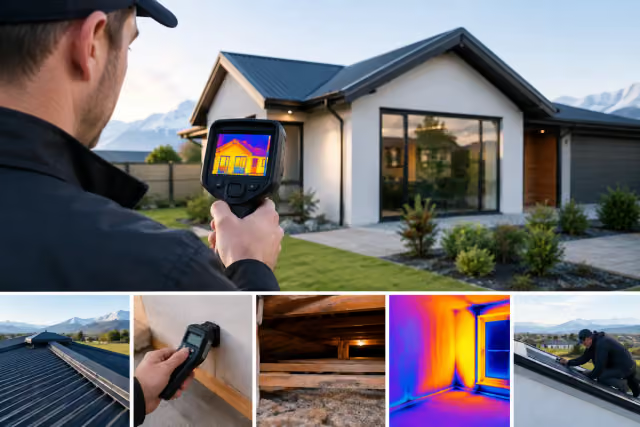
Can a thermal camera help spot problems that are easy to miss during a property viewing? Sometimes. It can reveal surface-temperature patterns that suggest where a closer look may be worthwhile — but the image itself is not proof of a leak or hidden defect.
A cold patch beside a window, a suspicious ceiling stain or a room that never seems to stay warm can raise questions for Christchurch home buyers. Thermal imaging adds another source of evidence when it is used alongside a careful visual inspection and, where appropriate, moisture testing.
Thermal imaging is not automatically included in a standard Mainland Home Inspections pre-purchase inspection. It is a separate assessment option where requested and available, or may be used when circumstances justify further investigation. The scope and any additional fee should be confirmed before booking.
What does a thermal imaging camera actually show?
A thermal camera detects infrared energy and displays differences in surface temperature. The colours help an inspector compare neighbouring areas of walls, windows, ceilings and other accessible building surfaces.
What a thermal camera cannot do is see through walls, measure moisture directly, identify mould conclusively or confirm structural damage. A cool area might relate to dampness, missing insulation, airflow, a shaded surface or a normal construction detail. The building context determines what the pattern means.
A thermal image is a clue, not a diagnosis.
Three things thermal imaging may help investigate
Moisture
Unexpected cooler patterns around a window, shower, ceiling junction or external wall may warrant further checking, particularly where there is staining, deteriorated sealant or a known history of leaks. Moisture cannot be confirmed by temperature alone. Where needed, the next step may be targeted moisture measurements or a specialist investigation.
Read more about optional moisture screening.
Insulation
Where a suitable temperature difference exists, thermal imaging may show areas of inconsistent insulation performance, thermal bridging or heat loss. This can be useful for older Canterbury homes, extensions and properties with cold rooms — but it does not establish compliance with insulation requirements on its own.
Draughts
Temperature patterns around window frames, doors and building junctions may point to possible air leakage. Airflow, heating and outdoor conditions can all influence what appears on the screen, so findings need to be interpreted carefully.
Why inspection conditions matter in Canterbury
Temperature contrast is central to obtaining useful images. Sun-warmed cladding, wind, rain, recently switched-on heating, curtains, furniture and stored belongings can all affect results or hide parts of a wall.
A scan carried out on a particular day is therefore a snapshot of the conditions at that time. A responsible report should describe important limitations rather than implying the whole building has been tested or cleared of hidden defects.
When is thermal imaging worth considering before buying?
You may wish to discuss a targeted thermal assessment if a property has unusual staining, damp smells, a previous leak, unexplained cold areas or complicated alterations. A tidy appearance or fresh coat of paint does not rule out concealed problems, but neither does it mean every house needs thermal imaging.
For most purchasers, the starting point is a thorough pre-purchase building inspection in Christchurch. If visual findings raise specific concerns, additional investigations can then be considered in the context of the house and your due-diligence deadline.
How thermal findings should appear in your report
A useful report connects any significant thermal pattern to its location, visible evidence, limitations and recommended next step. Ideally, a regular photograph accompanies the thermal image so you can recognise the precise area being discussed.
At Mainland Home Inspections, the goal is clear, practical reporting — not dramatic pictures or unsupported claims. Where an issue remains uncertain, the report should say what further assessment is needed.
See what a Christchurch building inspection report reveals and how building inspection pricing works.
Frequently asked questions about thermal imaging
Can a thermal camera detect a water leak?
It can highlight a temperature pattern that may be consistent with moisture, but it cannot confirm a leak on its own. Other observations or testing may be needed.
Can thermal imaging see through walls?
No. It records infrared radiation from visible surfaces; it does not produce a picture of the inside of a wall.
Is thermal imaging included in the standard $299 inspection?
No. Standard building inspections are primarily visual. Additional thermal imaging is not automatically included and its availability, scope and price should be confirmed separately.
Does a normal-looking thermal image mean the house is dry?
No. Some moisture problems produce little or no useful thermal contrast, and access or conditions may limit what can be detected.
Book a building inspection in Christchurch or Canterbury
If you're buying or selling in Christchurch, Selwyn or Waimakariri, start with a clear building inspection and discuss any extra thermal assessment if there is a particular concern.
Check inspection pricing and available appointments — choose a time online and pay later. If you have a specific thermal concern, contact us before booking so the additional scope can be discussed.