
Building Inspections: What Your Report Should Tell You
A property can look well presented at an open home and still carry expensive maintenance, moisture or construction concerns. Building inspections give you a clearer view before you commit, helping turn a major property decision into one based on evidence rather than assumptions.
For buyers, sellers, landlords and new-build owners, the value is not simply a list of defects. A useful inspection explains what has been observed, why it matters, what may need further attention and where to focus first. The result should be clear enough for a first-home buyer to understand and detailed enough to support an informed investment decision.
What building inspections are designed to do
A residential building inspection is a visual assessment of accessible areas and building elements at the time of inspection. It considers the general condition of the home, identifying visible signs of defects, damage, moisture concerns, deferred maintenance and workmanship issues that could affect your decision or future costs.
A thorough report commonly considers areas such as the roof exterior where accessible, cladding, windows, gutters, drainage observations, subfloor areas where accessible, interior linings, wet areas, roof spaces and visible structural components. It also records relevant site observations, because the way water moves around a property can be as significant as what is visible inside it.
An inspection has sensible limits. Inspectors cannot see through walls, lift floor coverings or assess areas that are inaccessible, unsafe or concealed. A report should make those limitations clear rather than implying that every possible issue has been ruled out. Where an observation needs specialist investigation, that should be stated plainly so you know what to consider next.
The report matters as much as the inspection
The inspection itself happens on site, but the report is the document you will use when decisions need to be made quickly. It should not leave you decoding vague phrases or searching for the practical meaning of a technical observation.
Look for a report that separates more significant concerns from routine maintenance. A loose gutter, ageing sealant and a suspected moisture issue do not carry the same level of urgency. Clear priority ratings help you distinguish between work that may require prompt attention, maintenance to budget for and minor items that can be monitored.
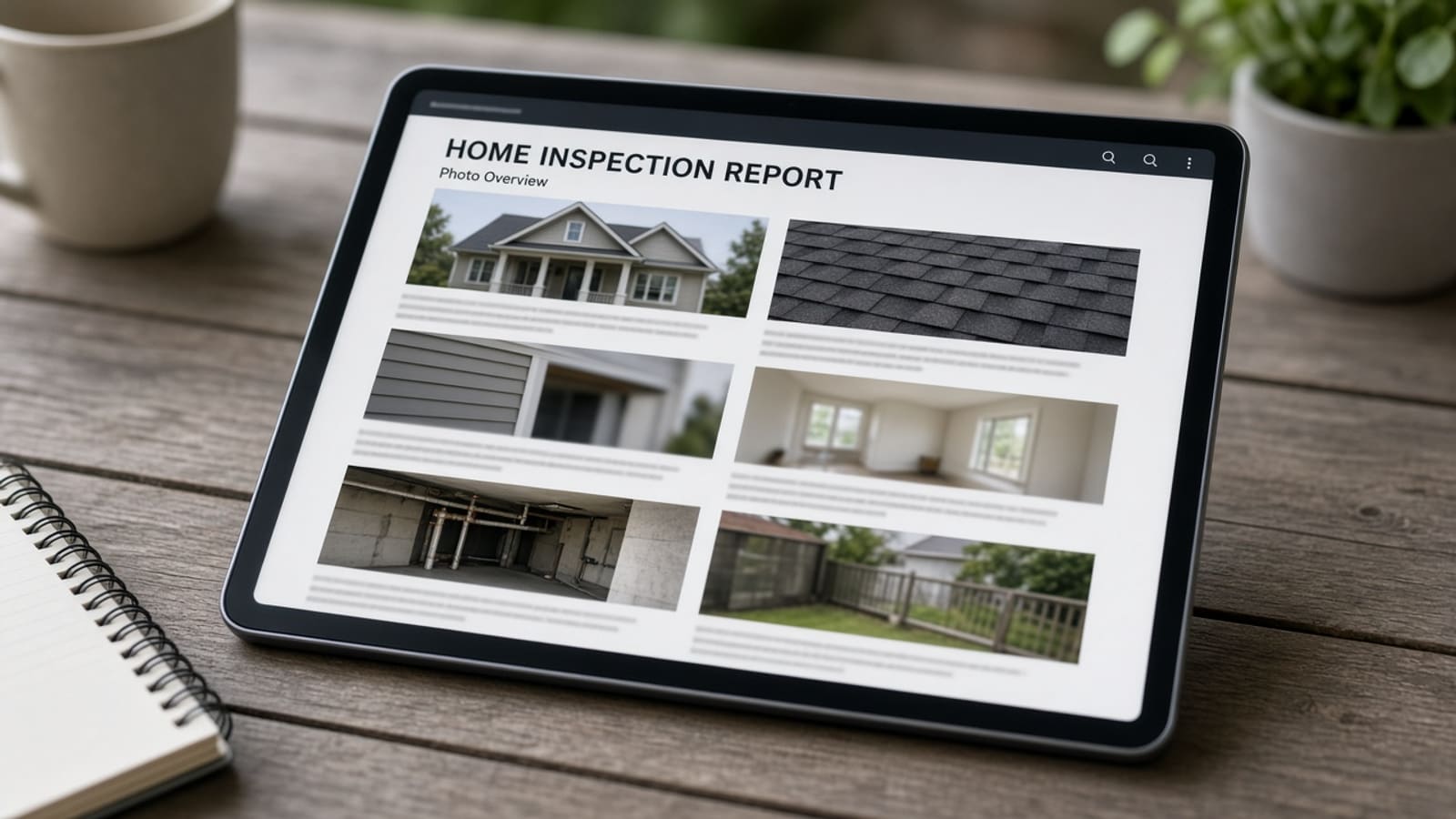
High-quality photographs are equally useful. They show the location and condition observed, making it easier to discuss findings with a vendor, builder, tradesperson or adviser. Where appropriate, thermal imaging and moisture assessment tools can add valuable context to visual observations, particularly in areas where moisture may be a concern. They are diagnostic aids, not a substitute for further investigation when evidence points to a larger issue.
The best reports use plain English without oversimplifying the risk. You should be able to answer three practical questions after reading one: what was found, why does it matter, and what should I do about it?
What a clear recommendation looks like
A useful recommendation is specific without overstating certainty. For example, rather than saying a defect is definitely causing hidden damage, a report may record the visible evidence, explain the potential consequence and recommend further assessment or repair by a suitable professional.
That distinction matters. It gives you a defensible record of the property’s observed condition while recognising that buildings can contain concealed conditions beyond the scope of a visual inspection.
When to arrange an inspection
Timing changes what you can do with the information. For a buyer, arranging an inspection during the due-diligence period means findings can inform your next steps before the purchase becomes unconditional. If significant work is identified, you have time to seek further advice, reassess your budget or discuss the issue through the appropriate transaction process.
Sellers can benefit from arranging a pre-sale inspection before the property is marketed. It gives you the chance to understand visible concerns, complete selected maintenance or present the home with fewer surprises later. This does not mean a buyer will not arrange their own inspection, but it can make preparation and communication more straightforward.
New-build and handover inspections serve a different purpose. The focus is on visible workmanship, incomplete items, damage and areas that may need to be raised before handover. A detailed, photo-rich report gives owners a practical record to work through with their builder.
For landlords and investors, condition reports support better maintenance planning across a portfolio. Repeated inspections can identify small external issues, moisture management concerns or worn components before they become more disruptive and costly to address.
The property type affects the inspection focus
No two houses present the same risk profile. Age, construction method, renovations, site conditions and maintenance history all influence what deserves closer attention.
A character home may require careful observation of weatherboards, joinery, roofing, underfloor areas and signs of long-term maintenance being deferred. A newer home may appear low risk, but workmanship details, drainage, flashings, sealants and handover items can still deserve attention. In a multi-unit property, the inspection scope should be understood clearly, particularly where common areas or shared building elements are involved.
In Christchurch and wider Canterbury, buyers may also want a clear view of how the home has been maintained in local weather conditions. Exposure, wind-driven rain, roof condition and site drainage are practical considerations, not cosmetic details.
How to get more value from your inspection
Start by booking early enough to act on the findings. A rapid report turnaround is helpful, but it cannot replace allowing yourself time to read the report properly and ask questions about anything unclear.
Before the inspection, provide any available property information that may be relevant, such as known alterations, previous reports or areas you are already concerned about. You can also make a short list of questions from the viewing. Perhaps a bedroom has a musty smell, a ceiling has been freshly painted, or a deck feels uneven. Raising these points helps ensure they are considered where accessible and within scope.
Once the report arrives, read the summary first, then review the supporting photographs and detailed sections. Avoid focusing only on the number of items listed. Every home will have maintenance needs, especially older properties. What matters is the type of issue, its likely urgency, the potential consequence of delay and whether further investigation is recommended.
If you are comparing two properties, assess them fairly. A shorter report does not automatically mean a better home, and a long report does not automatically make a home a poor purchase. One property may have many minor maintenance items, while another has fewer observations but one issue with greater potential cost or uncertainty.
Choosing an inspector with accountability
Price is relevant, but an inspection is part of a high-value decision. Consider the inspector’s building experience, professional credentials, insurance, reporting standard and whether the report is likely to be useful when you need to make a decision.
For residential inspections, NZS 4306 provides a recognised framework for the inspection process and reporting. It is worth confirming that the inspection will be carried out to this standard and understanding what is included in the agreed scope. Ask how quickly the report will be provided, whether it includes photographs, and how findings are prioritised.
Mainland Home Inspections combines Licensed Building Practitioner experience, NZS 4306-compliant inspections and detailed digital reporting to make property condition easier to understand. A report delivered promptly is particularly valuable when a sale timeline is tight, provided it still gives you the evidence and practical recommendations needed to act with confidence.
Treat findings as a plan, not a verdict
A building inspection is not a pass-or-fail test. Homes are complex, and even well-maintained properties will have items to repair, monitor or budget for over time. The purpose is to replace uncertainty with a clearer picture of visible condition and likely priorities.
Use the report to ask better questions, plan sensible maintenance and make your next property decision with your eyes open. That is often the most valuable protection an inspection can provide.
Also shared on our Google Business Profile.