
Thermal Imaging Versus Moisture Meter Compared
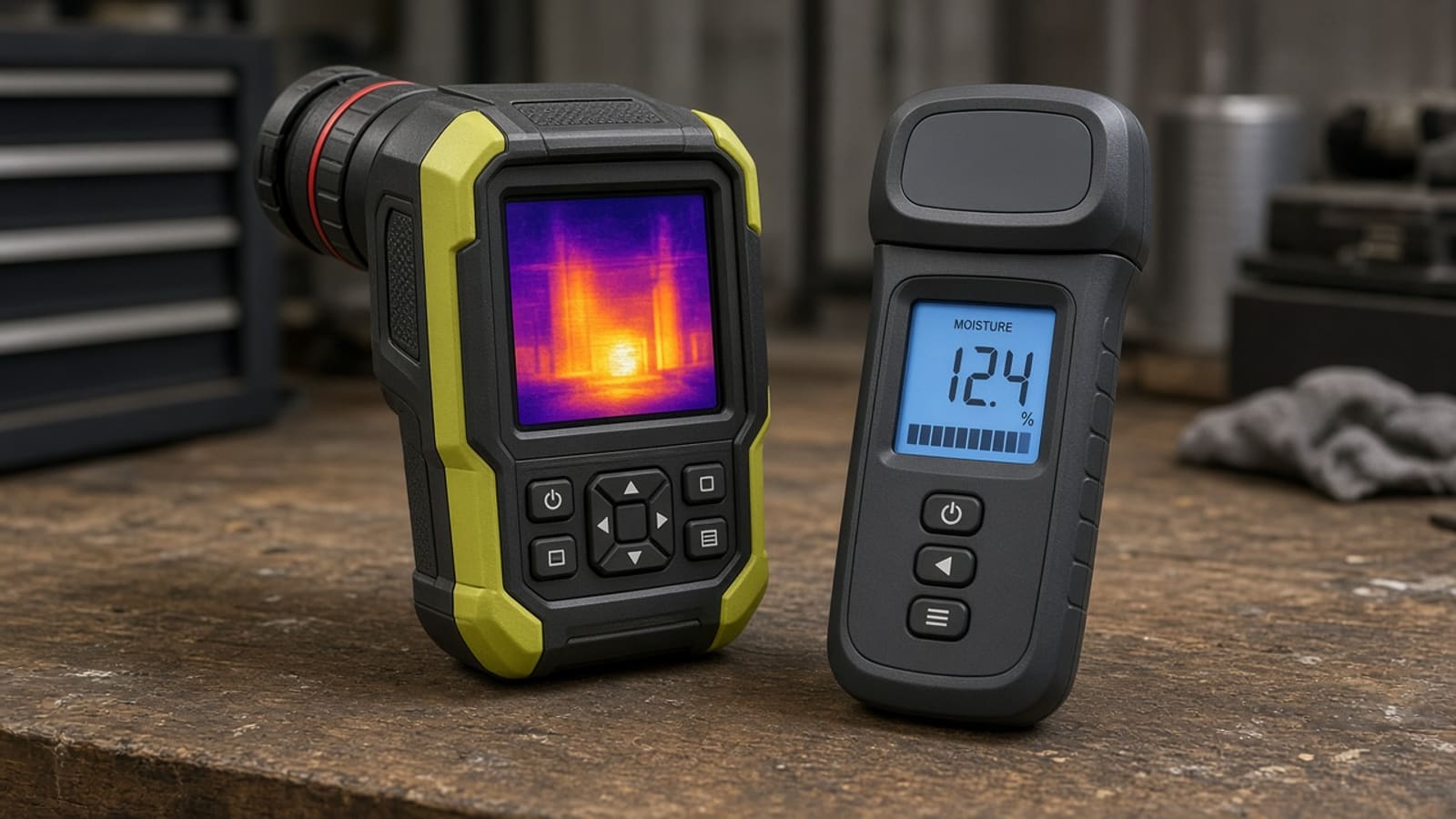
A suspicious stain beside a window, a chilly patch on an exterior wall, or a musty smell in a bedroom can quickly raise a bigger question: is there hidden moisture in the building? Thermal imaging versus moisture meter testing is not an either-or choice in many property inspections. Each tool answers a different question, and the strongest findings come from using them alongside a careful visual assessment.
For buyers, sellers and landlords, the distinction matters. One tool may identify an area that needs closer attention; the other may help test whether moisture is likely to be present in the material. Neither tool, used alone, can confirm the full cause or extent of a concealed defect.
What thermal imaging can show
A thermal camera records surface temperature differences. It translates those differences into a colour image, making unusually cool or warm areas easier to see than they would be with the naked eye.
In a house, an unexpected cool pattern can be a useful clue. It may be associated with moisture evaporation, missing or displaced insulation, air leakage, thermal bridging, or a difference in construction materials. Around windows, roofs, bathrooms and exterior cladding, these patterns can help an inspector focus attention where it is most needed.
This is particularly useful during a pre-purchase inspection, when access is limited and decisions need to be made promptly. Thermal imaging can help direct further checks without opening walls or damaging finishes. It also provides visual evidence that can be included in a clear, photo-rich report.
However, a thermal image does not show water itself. It shows temperature variation. A cold area may be damp, but it may also be cold because of shade, wind, poor insulation, a gap in the lining, recent weather, or a change in the material behind the surface. Sun exposure and heating inside the home can also affect the image.
That is why thermal imaging is best treated as a screening and investigation tool, not a stand-alone moisture diagnosis.
What a moisture meter can show
A moisture meter is used to assess the moisture condition of a material at a particular location. Depending on the meter and the surface being tested, it can provide a comparative reading that helps an inspector assess whether an area is behaving differently from surrounding material.
When an area has been identified visually or through thermal imaging, moisture meter testing can add valuable evidence. For example, if a wall lining near a shower has a cool pattern and elevated comparative readings compared with a dry section of the same wall, that strengthens the case for further investigation.
The key word is comparative. Moisture readings need context. Readings can be affected by the type and density of material, metal fixings, foil-backed insulation, salts, surface finishes and other site conditions. A high reading is a concern to interpret, not an automatic diagnosis of a leak. Equally, a normal reading at one accessible point does not prove that moisture is absent elsewhere behind a wall or beneath a floor.
Pin-style meters can test at a small number of points by making minor penetrations, while non-invasive meters assess moisture patterns below the surface without piercing the finish. The most suitable approach depends on the property, access, surface material and permission to test.
Thermal imaging versus moisture meter: the practical difference
Thermal imaging gives the wider picture. It can reveal a pattern across a wall, ceiling or junction that may otherwise go unnoticed. It is especially useful for finding areas worth investigating, such as a cool strip below a roofline or a distinct temperature change around a window opening.
A moisture meter provides a more localised check. It helps an inspector compare the suspected area with nearby material and decide whether the pattern may be moisture-related. Used carefully, it can help separate a potential moisture issue from a temperature difference caused by insulation or air movement.
Put simply, thermal imaging asks, “Where is this surface behaving differently?” A moisture meter asks, “Is there evidence that this material may have a higher moisture condition here?” Neither question, on its own, necessarily identifies where water entered, how long it has been present, or whether concealed framing has been affected.
Why conditions on the day matter
Both tools are influenced by the inspection environment. A home that has been heated all morning, a wall exposed to afternoon sun, recent heavy rain, or a bathroom recently used for showering can all change the results.
Thermal imaging needs sufficient temperature contrast between indoors and outdoors to make certain building features clearer. A thermal pattern viewed at one time of day may be less apparent later. Moisture meter readings also need to be assessed against comparable dry areas and the particular materials being tested.
This is where experienced interpretation makes a real difference. The aim is not to produce an alarming image or a single number. It is to consider the building as a whole: cladding condition, flashings, roof drainage, joinery, ventilation, visible staining, maintenance history and the pattern of any readings.
When both tools are worth using
The combined approach is often most useful where there are warning signs but no obvious source. This may include staining, bubbling paint, deteriorated sealant, mould growth, a persistent musty smell, a leaking shower area, or concerns around windows and exterior cladding.
It can also be valuable for properties with limited visible evidence. A freshly painted wall may look tidy, but visual presentation alone cannot establish whether underlying concerns have been resolved. In that situation, thermal imaging and targeted moisture testing can provide additional, non-destructive information to support the inspection findings.
For a purchaser, this can help turn a vague concern into a practical next step. The report may identify an area for monitoring, recommend maintenance, or advise that further assessment by an appropriately qualified specialist is warranted before relying on the property’s condition.
For a seller, identifying concerns before listing can reduce the chance of being surprised during a buyer’s due diligence. It also allows time to understand the issue and decide how to address it or disclose it accurately.
What these tools cannot tell you
It is reasonable to expect professional diagnostic tools to add depth to an inspection. It is not reasonable to expect them to see through every lining, prove the condition of inaccessible building elements, or identify every concealed defect.
A thermal camera cannot confirm a leak simply because it finds a cool area. A moisture meter cannot establish the age of moisture, determine the full extent of damage, or always identify the source. Access restrictions, furniture, stored belongings, floor coverings and wall linings can all limit what can be assessed during a non-invasive inspection.
Good reporting should make those limits clear. It should distinguish between an observed defect, a pattern that raises concern, and a recommendation for further investigation. That clarity helps buyers avoid both extremes: overlooking a genuine risk or assuming the worst from one isolated reading.
Choosing the right inspection approach
If you are buying in Christchurch or wider Canterbury, ask what diagnostic tools may be appropriate for the property and the concerns identified on site. Older homes, altered homes, properties with known water-ingress history, and homes with visible maintenance issues may warrant closer moisture-focused assessment.
At Mainland Home Inspections, thermal imaging and moisture investigation findings are considered alongside the broader property inspection, then explained in plain English with supporting visual evidence and practical recommendations. The purpose is to give you useful information for a decision, not a confusing collection of technical images and figures.
When a house presents a possible moisture concern, the most valuable outcome is a clear next step. That might be reassurance based on consistent findings, a maintenance item to plan for, or a specific area to investigate further before you commit.
Also shared on our Google Business Profile.