
Are Moisture Readings Included in Reports?
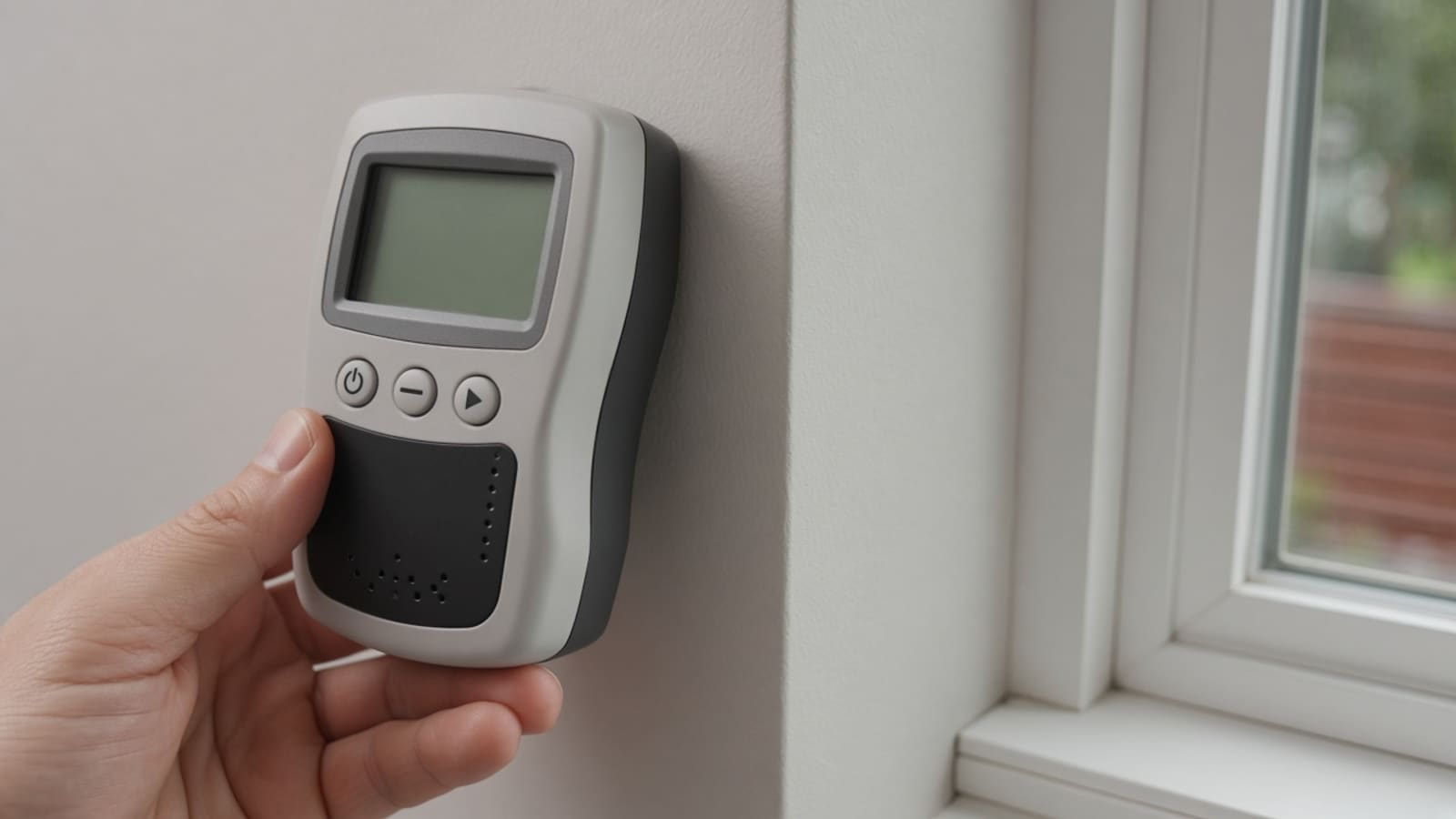
A dark mark beside a window, a soft skirting board or a musty smell can raise an immediate question before you commit to a property: are moisture readings included in reports? The useful answer is not simply yes or no. It depends on the inspection scope, the areas accessible on the day, the signs observed and whether moisture testing has been requested or is warranted by the inspection findings.
For a buyer, seller or investor, the key is to understand what the report records, what a reading can indicate and where its limits sit. A number on its own is not a diagnosis. Recorded properly, however, it can be valuable evidence that helps you decide whether to seek further investigation, plan maintenance or revisit the terms of a purchase.
Are moisture readings included in inspection reports?
A professional residential inspection report may include moisture readings where testing forms part of the agreed service or where the inspector identifies conditions that justify checking particular accessible areas. That might include locations around windows, showers, external cladding, roof penetrations, plumbing fixtures or areas with visible staining and deterioration.
It should not be assumed that every wall, floor or ceiling in a house will be moisture tested as part of a standard visual inspection. Properties vary greatly in size, construction type, access and condition. Furnishings, wall linings, fixed cabinetry, stored belongings and finishes can also limit what can be assessed without invasive work.
Before booking, ask a direct question: does the inspection include moisture testing, and how will any results be presented? A clear provider should explain the scope in plain English rather than leaving you to interpret a broad service description.
Where readings are included, a good report should identify the tested location and provide enough context to make the result meaningful. That could include photographs, notes on visible conditions, a description of the material tested and practical recommendations for next steps. Mainland Home Inspections uses detailed digital reporting to present inspection findings clearly, so clients can see both the evidence and the reason it matters.
What a moisture reading can tell you
Moisture meters are diagnostic tools, not verdict machines. Their readings can help identify areas that differ from surrounding materials or that deserve closer attention. When used alongside visual inspection and the building's known construction details, they add another layer of information to the assessment.
For example, an elevated result at the base of an accessible wall near a shower may support a concern about water exposure in that location. A reading near a window may be considered alongside cracked sealant, damaged cladding, staining or an issue with drainage. Conversely, a reading without any supporting signs may need cautious interpretation. Surface conditions, material type and recent weather can influence results.
The strongest reporting does not overstate what a meter can prove. It connects the reading with observable evidence and explains whether monitoring, maintenance, repair assessment or a more targeted moisture investigation is appropriate.
Readings are most useful when compared
One isolated result has limited value without a reference point. Inspectors may compare readings from similar accessible areas to identify variation, while considering the material being tested and the likely source of moisture.
This is why a photo-rich report is helpful. If a result is attached to a clearly labelled image and a precise location, you can discuss it more effectively with the vendor, your adviser or an appropriate trade professional. It also creates a useful record if you need to monitor the area over time.
A normal reading is not a guarantee
A lower or unremarkable reading should not be treated as proof that no moisture issue exists anywhere in the building. Moisture can be intermittent, concealed, localised or inaccessible at the time of inspection. Equally, an elevated reading does not automatically confirm a leak or establish the full extent of an issue.
This is not a weakness in reporting. It is the reality of non-invasive property inspection. A careful report makes those boundaries clear, identifies observed risks and tells you what further enquiry may be sensible.
Where moisture testing is commonly considered
The areas selected for testing should follow the inspection evidence rather than a fixed checklist alone. In a typical home, attention may be directed to wet areas, window and door openings, external wall junctions, areas beneath or beside plumbing fixtures, ceilings with staining and accessible spaces where water entry is suspected.
Older properties and homes with particular cladding, altered openings, tired sealants or deferred maintenance may require closer consideration. Newer homes are not automatically free from risk either. At handover, practical inspection evidence can help identify workmanship concerns and incomplete items before they become harder to address.
The history of the property also matters. If the owner mentions previous leaks, repairs or recurring condensation, tell the inspector before the appointment. That information can help focus attention on relevant accessible locations. It does not replace inspection evidence, but it can make the assessment more targeted.
What to look for in a report with moisture results
A report that simply says “high moisture” leaves too much unanswered. You should be able to understand where the reading was taken, why the area was assessed and what action is recommended.
Look for clear location references, supporting photographs and an explanation that distinguishes observed facts from possible causes. Plain-English recommendations are especially valuable. “Monitor and maintain sealant” is a different level of concern from “obtain further specialist investigation before proceeding”, and the report should make that distinction easy to see.
The report should also record limitations. If an area could not be accessed because it was behind furniture, beneath a floor covering or within a locked space, that affects the confidence that can be placed on the assessment. Transparent limitations are not a reason to dismiss a report. They help you understand where residual uncertainty remains.
For time-sensitive Christchurch and Canterbury transactions, report turnaround matters too. Receiving clear findings promptly gives you more time to ask questions, arrange additional assessment if needed and make decisions with better information.
When a reading should prompt further investigation
Further investigation may be appropriate where the report identifies elevated readings alongside visible deterioration, recurring staining, damaged linings, mould-like growth, failed sealants or other evidence of water entry. It may also be sensible where several related locations show concerning results, even if the likely source is not immediately clear.
The next step depends on the circumstances. It could be a targeted moisture investigation, advice from a suitably qualified repair professional, or more information about past repairs and warranties. If you are buying, build enough time into your due diligence process to consider the findings properly rather than treating the report as a box-ticking exercise.
Sellers can benefit from the same clarity before listing. Knowing about a moisture-related concern early gives you the choice to investigate, repair or disclose the condition accurately with supporting information. It can reduce avoidable surprises once a buyer commissions their own inspection.
Questions to ask before you book
The simplest way to avoid confusion is to confirm the scope upfront. Ask whether moisture readings are included, whether the service is visual and non-invasive, what areas may be tested, and how results will appear in the final report. Also ask when you will receive the report and whether you can contact the inspector if a finding needs clarification.
These questions are particularly worthwhile for homes with a known leak history, visible staining, extensive wet areas, recent renovations or any construction detail that already concerns you. A standard building inspection may be the right starting point, but a dedicated moisture investigation may be more suitable when moisture risk is the central issue.
A well-presented reading is not there to create alarm. It is there to turn a vague concern into a documented, practical question: what is happening here, how significant may it be, and what should be checked next? That clarity is what helps you move forward with confidence.
Also shared on our Google Business Profile.